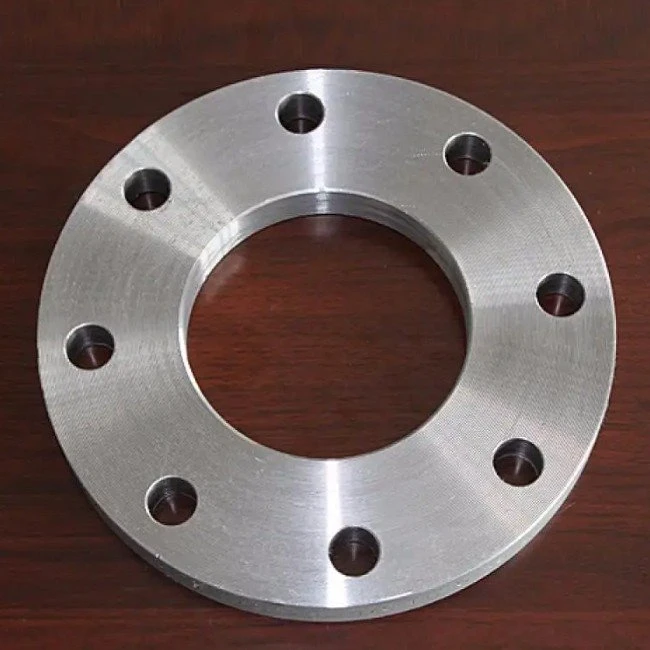
Carbon Steel Flat Flanges | DIN 1.0402, DIN 1.0460, DIN 1.0619, ASTM/ASME A/SA105 A/SA105N & A/SA216-WCB, Die Steel, ASTM A105/ ASME SA105, A105N, ASTM A350 LF2/ ASME SA350, High Yield CS ASTM A694/ A694 (F52 F56 F60 F65 F70 F80).
Rearranging the above content, we have the following information:
The steel grades DIN 1.0402, DIN 1.0460, and DIN 1.0619, along with ASTM/ASME A/SA105 A/SA105N & A/SA216-WCB, are widely used in various industries. These materials are commonly used in the manufacturing of components and parts due to their excellent properties.
Die Steel is another type of steel that is specifically designed to withstand high stresses and temperatures. It is often used in mold-making and die-cutting applications.
ASTM A105/ ASME SA105 and A105N are specification standards for carbon steel forgings for piping applications. These standards ensure the quality and integrity of the forged components used in various industrial processes.
ASTM A350 LF2/ ASME SA350 is a low-temperature carbon steel grade that is commonly used in the manufacturing of pressure vessels and valves. It offers excellent toughness and resistance to high pressures and low temperatures.
High Yield CS ASTM A694/ A694 is a high-strength carbon steel grade that is primarily used in the construction of pipelines and structural components. The different grades, such as F52, F56, F60, F65, F70, and F80, represent varying levels of yield strength and impact resistance.
In summary, the mentioned steel grades and specifications play a crucial role in various industries due to their unique properties and suitability for specific applications. |
Stainless Steel Flat Flanges | DIN 1.4301, DIN 1.4306, DIN 1.4401, DIN 1.4404, DIN 1.4308, DIN 1.4408, DIN 1.4306, DIN 1.4409, ASTM/ASME A/SA182 F304, F304L, F316, F316L, ASTM/ASME A/SA351 CF8, CF3, CF8M, CF3M. These are the various grades and specifications for stainless steel materials commonly used in the industrial sector.
When it comes to stainless steel, there is a wide range of grades that offer different properties and applications. The DIN 1.4301 and DIN 1.4306 are both austenitic stainless steel grades, commonly referred to as 304 and 304L. They are known for their excellent corrosion resistance and versatility, making them suitable for various environments and industries.
On the other hand, the DIN 1.4401 and DIN 1.4404 are also austenitic stainless steel grades, known as 316 and 316L. These grades have higher corrosion resistance compared to 304 and 304L, especially in environments containing chloride ions. They are often used in applications where enhanced resistance to pitting and crevice corrosion is required.
In addition to the DIN grades, there are also ASTM/ASME A/SA182 and A/SA351 grades. ASTM/ASME A/SA182 F304, F304L, F316, and F316L are all forged stainless steel grades commonly used for high-pressure and high-temperature applications. These grades exhibit excellent mechanical properties and resistance to corrosion.
Similarly, ASTM/ASME A/SA351 CF8, CF3, CF8M, and CF3M are cast stainless steel grades that offer good corrosion resistance and excellent weldability. They are commonly used in various industries such as chemical, food processing, and pharmaceutical.
To summarize, these stainless steel grades play a crucial role in different industrial applications. Their unique properties and characteristics make them suitable for a wide range of environments and industries, ensuring durability and reliability in various applications. |
Alloy Steel Flat Flanges | ASTM A182/ ASME SA182 F5, F9, F11, F12, F22, F91 |
Titanium Flat Flanges | The following titanium grades conform to ASTM B381/ ASME SB381: Grade 1, Grade 2, Grade 4, Grade 5, and Grade 7. These grades are known for their high strength and excellent corrosion resistance properties. Grade 1 is the softest titanium grade and is used in applications where formability is crucial. Grade 2 is more commonly used due to its balance of strength and ductility. Grade 4 offers exceptional corrosion resistance and is predominantly used in chemical processing plants. Grade 5, also known as Ti-6Al-4V, is the most widely used grade and is ideal for aerospace applications. Grade 7 offers improved resistance to corrosion and is often used in chemical processing and marine applications. All these grades of titanium are highly versatile and are used in a variety of industries, including aerospace, chemical processing, marine, medical and more.
The following are the different grades of titanium based on the ASTM standard: GR.1/R50250, GR.2/R50400, GR.3/R50550, GR.4/R50700, GR.6, GR.7/R52400, GR.12/R53400, GR.9/R56320, and GR.5/R56400. These grade designations are used to differentiate between the various types of titanium alloys based on their chemical composition, mechanical properties, and intended uses. Each grade has its own unique characteristics and is suited for specific applications, ranging from aerospace and marine to medical and industrial. Understanding the differences between these grades is important when selecting the appropriate titanium alloy for a given application. |
Copper Flat Flanges | Here is a list of different types of copper alloys: T1, T2, C10100, C10200, C10300, C10400, C10500, C10700, C10800, C10910, C10920, TP1, TP2, C10930, C11000, C11300, C11400, C11500, C11600, C12000, C12200, C12300, TU1, TU2, C12500, C14200, C14420, C14500, C14510, C14520, C14530, C17200, C19200, C21000, C23000, C26000, C27000, C27400, C28000, C33000, C33200, C37000, C44300, C44400, C44500, C60800, C63020, C68700, C70400, C70600, C70620, C71000, C71500, C71520, C71640, and many more.
There are so many varieties of copper alloys available that one can customize according to their needs. Copper is a versatile metal that is helpful in various industries such as electrical, plumbing, construction, and more. These alloys have their own unique properties and are created by combining copper with other metals. Depending on the combination, some alloys may have a higher tensile strength, improved corrosion resistance, or better conductivity than pure copper. It is essential to choose the right copper alloy as it can affect the overall quality and performance of the final product.
In conclusion, the above mentioned copper alloys are just a small sampling of what is available on the market. Each of these alloys has their own unique properties, and it is important to select the right one for the job. With the right combination of copper and other metals, one can design an alloy that meets the specific requirements for their particular application. |
Copper Nickel Flat Flanges | The materials that conform to ASTM/ ASME SB 61/ 62/ 151/ 152 are Copper Nickel 90/10 (C70600), Cupro Nickel 70/30 (C71500), and UNS C71640. These materials are widely used in various industries due to their excellent corrosion resistance and exceptional durability. Copper Nickel 90/10 is a copper-nickel alloy that contains 90% copper and 10% nickel, while Cupro Nickel 70/30 is an alloy with 70% copper and 30% nickel. UNS C71640 is a modified version of Copper Nickel 90/10 that contains small amounts of iron and manganese.
The Copper Nickel 90/10 (C70600) alloy is commonly used in saltwater applications such as marine engineering, desalination plants, and offshore oil and gas platforms. It is highly resistant to corrosion caused by seawater and has excellent resistance to erosion as well. Cupro Nickel 70/30 (C71500), on the other hand, is widely used in heat exchangers, electrical cables, and turbines due to its excellent thermal conductivity and high ductility. It is also resistant to corrosion caused by seawater, making it ideal for use in marine environments.
UN C71640 is a modified version of the Copper Nickel 90/10 alloy that contains small amounts of manganese and iron. This alloy is typically used in heat exchangers and condensers due to its excellent resistance to crevice corrosion and stress corrosion cracking. It is also highly resistant to erosion, making it ideal for use in high-velocity environments.
In summary, the materials that conform to ASTM/ ASME SB 61/ 62/ 151/ 152, namely Copper Nickel 90/10 (C70600), Cupro Nickel 70/30 (C71500), and UNS C71640, are known for their exceptional durability and corrosion resistance. These materials are widely used in various industries, including marine engineering, desalination plants, heat exchangers, and offshore oil and gas platforms. |
Brass Flat Flanges | 3602/ 2604/ H59/ H62/ etc. |
Inconel Flat Flanges | We offer a range of flat flanges made from high-quality materials, including Inconel 600, 601, 625, 718, 783, 690, and x750. These flanges are manufactured to adhere to ASTM B564/ ASME SB564 standards, ensuring they meet the required specifications for your project. Our flat flanges are durable and reliable, perfect for use in various industries and applications. They are designed to withstand high temperatures and pressure, making them ideal for harsh environments. Choose from our selection of flat flanges today and enjoy the peace of mind that comes with knowing you're using top-quality products. |
Hastelloy Flat Flanges | The ASTM B564/ ASME SB564 standard outlines the requirements for flanges made from various types of Hastelloy alloys, including Hastelloy C276 (UNS N10276), Hastelloy C22 (UNS N06022), Hastelloy C4, Hastelloy C2000, Hastelloy B2, Hastelloy B3, and Hastelloy X. These alloys are known for their exceptional resistance to corrosion, particularly in harsh environments where other materials may not be suitable.
Hastelloy C276 is a nickel-molybdenum-chromium alloy that offers excellent resistance to oxidizing and reducing acids, as well as to pitting and crevice corrosion. It is also highly resistant to stress-corrosion cracking and has good mechanical properties at both ambient and elevated temperatures.
Hastelloy C22 is a nickel-chromium-molybdenum-tungsten alloy that provides superior resistance to both oxidizing and reducing acids, as well as to localized corrosion and stress-corrosion cracking. It also has good resistance to intergranular attack and can withstand a wide range of temperatures and pressures.
Hastelloy C4 is a nickel-chromium-molybdenum alloy that is particularly useful in high-temperature, high-corrosion environments. It offers excellent resistance to a variety of acids and oxidizing agents, as well as to pitting and crevice corrosion.
Hastelloy C2000 is a nickel-chromium-molybdenum alloy that offers exceptional resistance to a wide range of chemicals, including sulfuric acid, hydrochloric acid, and nitric acid. It also has good mechanical properties at high temperatures, making it well-suited for use in chemical processing applications.
Hastelloy B2 and B3 are nickel-molybdenum alloys that are highly resistant to reducing acids, particularly hydrochloric acid and sulfuric acid. They also offer good resistance to pitting and crevice corrosion and can withstand high temperatures and pressures.
Hastelloy X is a nickel-chromium-iron-molybdenum alloy that provides exceptional resistance to oxidizing and reducing environments. It is also highly resistant to stress-corrosion cracking and has good mechanical properties at high temperatures.
Overall, the various types of Hastelloy flanges covered by the ASTM B564/ ASME SB564 standard are ideal for use in a wide range of high-corrosion and high-temperature applications across various industries, including chemical processing, petrochemical, and oil and gas. |
Monel Flat Flanges | Monel 400 (UNS No. N04400) and Monel 500 (UNS No. N05500) are popular nickel-copper alloys that have found extensive applications in various industries. These alloys are known for their excellent resistance to corrosion, especially in highly acidic and alkaline environments. They also exhibit high strength and good mechanical properties even at high temperatures.
ASTM B564 and ASME SB564 are standards that specify the requirements for forged fittings, flanges, and valves made from Monel 400 and Monel 500. These fittings and flanges are widely used in industries such as chemical processing, marine engineering, oil and gas, and aerospace.
Monel 400, with its high content of nickel and copper, is ideal for applications where resistance to hydrofluoric acid and sulfuric acid is critical. Monel 500, on the other hand, contains aluminum and titanium, which makes it more resistant to corrosion in seawater and other marine environments.
Both Monel 400 and Monel 500 can be easily fabricated, welded, and brazed. They are also highly durable and have a long service life, making them a cost-effective option for many applications.
In summary, ASTM B564/ASME SB564 Monel 400 and Monel 500 are highly reliable and versatile alloys that provide excellent corrosion resistance and mechanical properties in various industrial settings. They are widely used in critical applications where failure is not an option. |
Alloy 20 Flat Flanges | Alloy 20Cb-3, also known as Carpenter® 20 Alloy, is a highly durable and corrosion-resistant metal that is widely used in a variety of industries. ASTM B462/ ASME SB462 is the standard specification for this alloy, which specifies the requirements for its chemical composition, mechanical properties, and other relevant factors.
Thanks to its unique composition, Alloy 20Cb-3 offers exceptional resistance to corrosion from a wide range of chemicals, including acids, alkalis, and salts. This makes it an ideal choice for applications in which other metals would quickly deteriorate and corrode.
Alloy 20Cb-3 also exhibits excellent mechanical properties at both high and low temperatures, making it a popular choice for use in extreme environments. Additionally, it is highly resistant to stress-corrosion cracking and pitting corrosion, which can be major concerns in many industrial applications.
Overall, Alloy 20Cb-3 is a versatile and reliable material that is used in a variety of applications, including chemical processing, pharmaceuticals, power generation, and more. When used in accordance with the ASTM B462/ ASME SB462 standard, it offers outstanding performance and durability that can help ensure long-lasting, reliable results. |
Aluminium Flat Flanges | 5052 /6061/ 6063/ 2017/ 7075/ etc. |
Nickel Flat Flanges | Nickel 200, Nickel 201, Nickel 205, Nickel 205LC are all alloys that adhere to the ASTM B564/ ASME SB564 standards. These nickel alloys exhibit excellent corrosion resistance and have various applications in different industries.
Nickel 200 is a pure grade nickel alloy that offers exceptional resistance to corrosive environments. It is commonly used in chemical processing, food processing, and synthetic fiber production.
Nickel 201 is similar to Nickel 200 but has a lower carbon content, making it even more resistant to embrittlement. It is suitable for applications involving temperatures above 600°C, such as in the production of vinyl chloride monomer, hydrochloric acid, and fluorine.
Nickel 205 is a wrought nickel alloy with high thermal and electrical conductivity. It is often used in electrical components, such as resistors and thermocouples, as well as in fuel cells and battery electrodes.
Nickel 205LC, on the other hand, is a low-carbon version of Nickel 205. It exhibits improved weldability and is commonly employed in electrical resistance welding applications.
Overall, these nickel alloys conforming to ASTM B564/ ASME SB564 standards offer a wide range of properties and applications, making them highly versatile and valuable in various industries. |
Duplex Flat Flanges | A182 Gr F51/ F52/ F53/ F54/ F55/ F57/ F59/ F60/ F61 are all grades of duplex stainless steel, which are commonly known as S31803/ S32205. These materials have excellent corrosion resistance and mechanical properties, making them ideal for use in various industries.
S31803 is a high-strength duplex stainless steel with a higher corrosion resistance than conventional austenitic stainless steels. S32205, on the other hand, is a duplex stainless steel with higher corrosion resistance and higher strength than S31803.
A182 Gr F51/ F52/ F53/ F54/ F55/ F57/ F59/ F60/ F61 are used in a wide range of applications, including chemical processing, petrochemicals, oil and gas exploration, and marine engineering. Their excellent properties make them highly sought after in these industries.
Overall, A182 Gr F51/ F52/ F53/ F54/ F55/ F57/ F59/ F60/ F61 (S31803/ S32205) have become some of the most widely used duplex stainless steels in the industry today, and likely will remain so for many years to come. |
Super Duplex Flat Flanges | S32750/ S32760 A182 Gr F51/ F52/ F53/ F54/ F55/ F57/ F59/ F60/ F61 |
Incoloy Flat Flanges | ASTM B564/ ASME SB564, Incoloy 800, 800H, 800HT (UNS N08800), 825 (UNS N08825), 925 Flanges |
254 Smo Flat Flanges | ASTM A182/ ASME SA182, SMO 254/6Mo, UNS S31254, DIN 1.4547 |
Nimonic Flat Flanges | Nimonic 75, Nimonic 80A, Nimonic 90 |
Other Flat Flanges material | Tin bronze, Alumunum bronze, Lead bronze |